
Callback

How-to guides

How to winterise your garden in autumn: a UK checklist

A UK checklist for September to November: the jobs that set the lawn, beds and pots up for spring, protect taps and tools from frost, and leave enough cover for wildlife.

Updated 10 min readBy Jay Wise

A rake in a pile of autumn leaves on the lawn
In this article
  1. The lawn
  2. Leaves
  3. Borders, beds and bulbs
  4. Pots and tender plants
  5. Outside taps, hoses and water butts
  6. Furniture, tools and the mower
  7. Wildlife
  8. Protecting your garden building

The short version

  • Scarify, aerate and feed the lawn in September or October, while the soil is still warm and moist.
  • Rake leaves off the lawn and turn them into leaf mould: most leaves take about two years to rot down fully.
  • Plant daffodils by the end of September and tulips in November.
  • Before the hard frosts, turn off and drain outside taps, bring hoses in and move tender plants under cover.
  • Leave some seed heads and leaf piles for wildlife, and check bonfire heaps for hedgehogs before lighting them.

Winterising a garden means getting the lawn, beds, pots, water supply and tools ready for cold and wet weather, while leaving enough cover for wildlife. In most of the UK the work runs from September to November. Timings shift with where you live: a sheltered city garden can be weeks behind a cold, exposed one, so treat the months below as a guide.

  1. Lawn careSeptember to OctoberScarify, aerate, overseed and feed
  2. Spring bulbsFrom SeptemberDaffodils by end of September, tulips in November
  3. Leaves and bordersOctober to NovemberRake, make leaf mould, mulch
  4. Frost jobsBefore hard frostsTaps, hoses, pots and tender plants
  5. Tools and mowerNovemberClean, oil and store
A rough autumn calendar for a UK garden. Shift it a few weeks either way for a cold, exposed garden or a mild, sheltered one.

The lawn

The RHS recommends September and October for lawn repairs, while the soil is warm and moist and the grass is still growing. Work in this order:

  1. Scarify: rake out the thatch of dead grass and moss with a spring-tine rake or a scarifier. If you cannot see soil between the blades of grass, the lawn will benefit.
  2. Aerate: on compacted patches, push a garden fork in every 10–15cm and rock it back. On clay, a hollow-tine aerator works better. Most lawns need this every two to three years.
  3. Overseed: sow seed on thin or bare patches. By October it is getting late for seed in cooler parts of the country.
  4. Feed: use an autumn lawn feed, which is rich in potassium and phosphorus to build roots rather than leafy growth.
  5. Mow: cut less often, with the blades set a little higher than in summer.
  6. Keep off: avoid walking on the lawn when it is frozen or waterlogged.

Leaves

Leaves left lying on a lawn block light and moisture and can smother the grass, so clear them every week or two rather than in one big session at the end.

  • Run a rotary mower with a collection box over leaves on the lawn: it picks them up and shreds them, so they rot down faster.
  • Rake leaves off paths and decking too, because wet leaves are slippery.
  • Make leaf mould: pack damp leaves into a wire cage, or into bin bags with holes pierced in them, and leave them out of sight. Most leaves take about two years to rot down fully, and after a year you have a rough mulch.
  • Shred thick leaves such as sycamore and horse chestnut first, as they are slow to break down.
  • Leave some leaves under hedges and in quiet corners for hedgehogs and insects.
  • Net ponds before the main leaf fall, or fish leaves out before they sink.
  • Clear leaves from drains, gutters and water butt filters so winter rain can get away.

Borders, beds and bulbs

  • Cut back perennials that have collapsed or look diseased, but leave sturdy seed heads and hollow stems standing: birds eat the seeds and insects shelter in the stems.
  • Mulch bare soil with garden compost, leaf mould or well-rotted manure while the ground is moist and not frozen.
  • Plant daffodils by the end of September and tulips in November.
  • Lift dahlias once frost has blackened the leaves and store the tubers somewhere cool and frost-free. In mild areas you can leave them in the ground under a thick, dry mulch instead.
  • Plant bare-root hedging, trees and roses from November, while they are dormant.
  • Clear finished vegetable crops to the compost heap, and cover empty beds with a mulch.

If you have a cat, plant bulbs where they will not be dug up: daffodils and tulip bulbs are on Cats Protection's caution list. Our cat-friendly garden guide lists the plants to avoid.

Pots and tender plants

  • Move tender plants into a greenhouse, a porch or the house before the first frost.
  • Stand pots on pot feet so they drain freely instead of sitting in water.
  • Group the pots that stay out against a sheltered wall, and wrap them in hessian or bubble wrap in a cold snap.
  • Bring in or empty terracotta pots that are not frost-resistant, because they can crack in a hard frost.
  • Cover tender plants left outside with horticultural fleece on frosty nights.

An unheated garden building is not frost-free, so don't rely on one to protect tender plants through a hard winter.

Outside taps, hoses and water butts

  • Turn the outside tap off at its isolating valve inside the house, then open the outside tap to drain the pipe.
  • Fit an insulated cover over the tap and lag any exposed pipework.
  • If the tap has no isolating valve, ask a plumber to fit one.
  • Drain hoses, coil them and store them under cover.
  • Clear leaves from water butt lids and downpipe diverters so the butts refill over winter.

Furniture, tools and the mower

  • Clean garden furniture, let it dry, then store it under cover or use breathable covers.
  • Bring cushions and parasols indoors.
  • Clean the soil off spades, forks and secateurs, dry them and wipe the metal with an oily rag to keep rust off.
  • Give the mower a final clean and follow its manual for winter storage, including what to do with any petrol left in it.
  • Store batteries for cordless tools indoors, as the maker advises.

A Garden Building gives all of this a dry, lockable home, with multi-point locks as standard and timber-clad double doors to start with in the configurator. A partition can split one building into a tool store and a potting area. See garden storage.

Wildlife

  • Leave some seed heads, a few piles of leaves and a log pile in a quiet corner.
  • Check bonfire heaps for hedgehogs before you light them, or build the heap on the day you burn it.
  • Check long grass and the bottoms of hedges before you mow or strim.
  • Clean bird feeders and baths, and keep them topped up through the winter.
  • Leave a small gap at the bottom of a fence so hedgehogs can travel between gardens.
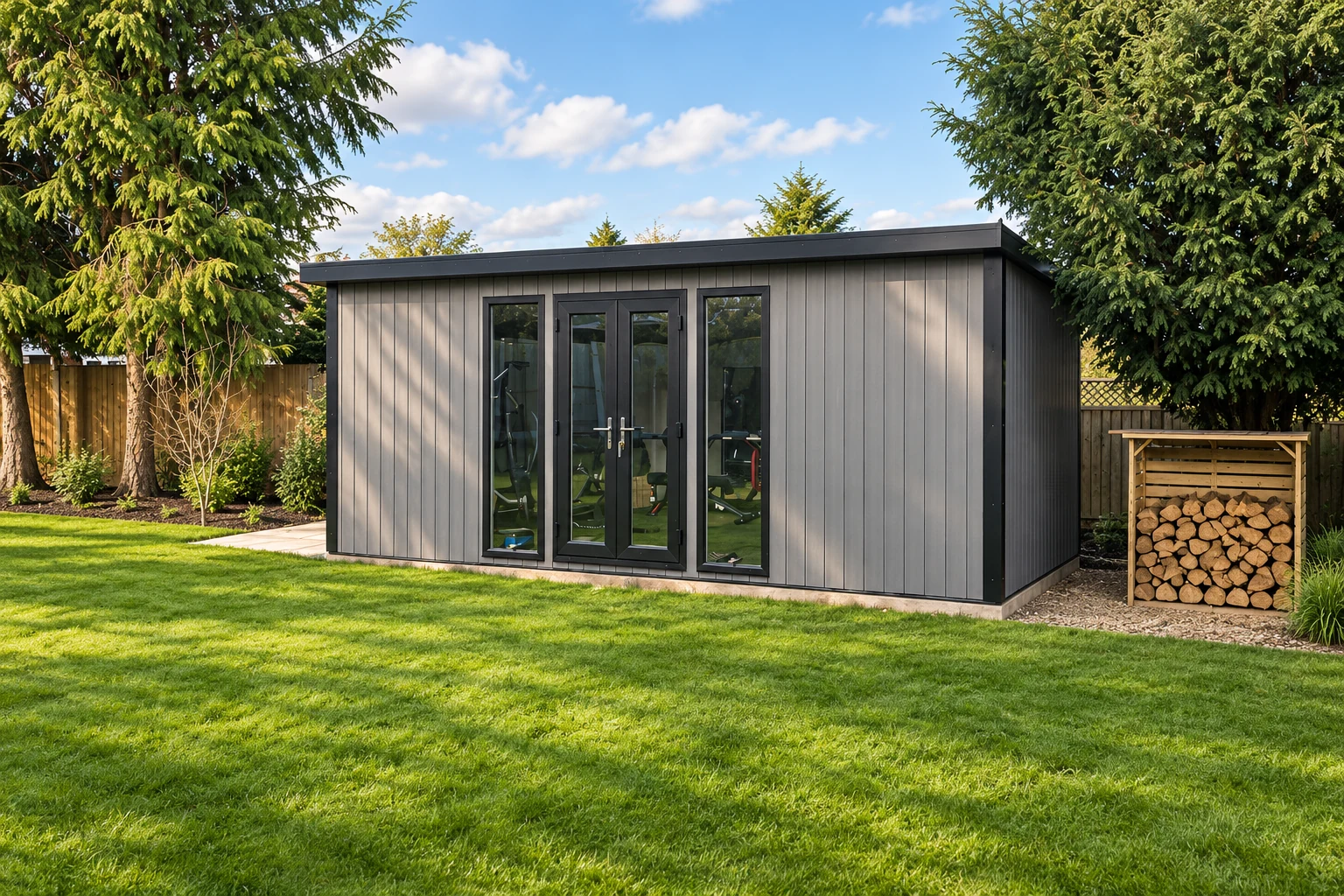
Noah garden building at the Shropshire home gym project
Cut logs piled by the fence in a Shropshire garden. A log pile left in a quiet corner gives insects and hedgehogs shelter over winter.

Protecting your garden building

Your garden building needs the same attention as the garden around it. Our pre-winter maintenance checklist covers it in full; these are the jobs that overlap with the garden.

  • Clear leaves from the roof edges, gutters and base, working from the ground. Never climb onto the roof.
  • Cut branches and climbers back from the roof and walls.
  • Keep soil, mulch and bark below the bottom of the cladding.
  • Keep pots and log piles a little way off the walls, so the cladding can dry and water can drain away.
  • Store water-based paint, and anything else frost can spoil, in the house rather than an unheated building.
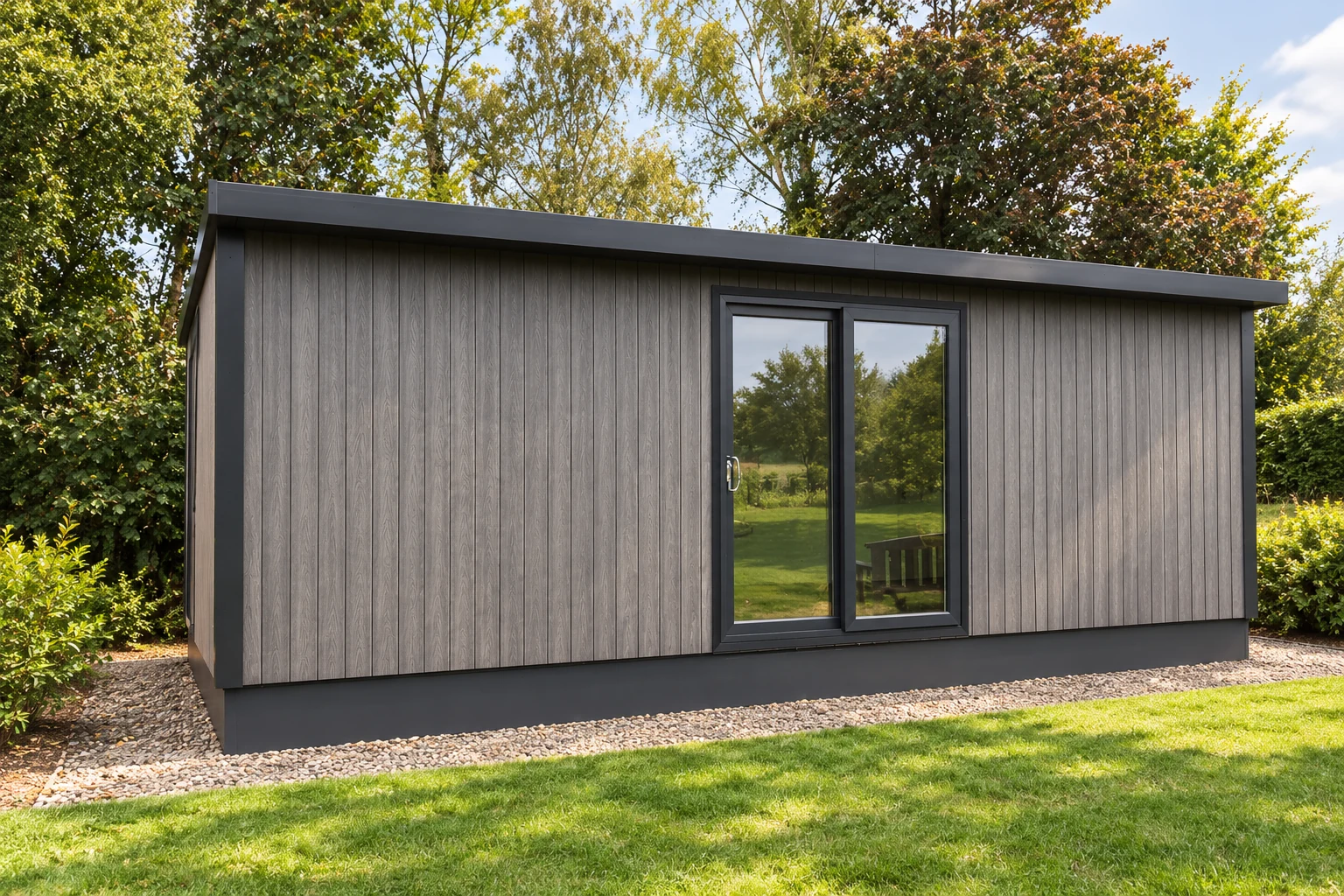
Grey composite Knighton garden room newly installed on a lawn
A composite room on newly cleared ground. Keep soil, bark and leaves below the bottom of the cladding so it can dry out.

If you also use the building through the winter, our guide to using a winter garden room covers heating, condensation and light.

Sources: RHS: lawn care in autumn; RHS: October lawn jobs; RHS: leafmould; RHS: planting bulbs; RHS: overwintering tender plants.


Written by Jay Wise, Director at Noah Garden Rooms, with the team at our Shropshire workshop. First published 10 October 2017. Updated 3 October 2026. Prices include VAT and are correct at October 2026.

Common questions

Questions we are often asked

When should I start getting my garden ready for winter?

Begin in autumn, but organise the work around your local weather, plants and the condition of the garden rather than a single date. Exposed or frost-prone sites may need attention earlier than sheltered gardens. Make a list separating seasonal plant care from tasks such as protecting vulnerable water fittings, checking paths and putting away equipment.

Walk around after rain to identify blocked drainage, slippery leaves and places where water collects. Keep the route to your garden room clear and avoid stacking furniture or bags against cladding, vents or gutters. Check the care instructions for outdoor furniture and tools before deciding how to store them, and allow damp items to dry first.

For planting, identify the species before pruning or deciding what needs protection. The RHS monthly guidance is a useful starting point, with more detailed advice for individual plants. Tackle manageable jobs in suitable conditions, and arrange appropriate help for work at height or anything involving electrical or plumbing faults. Keep a record of problems that need attention before the weather deteriorates.

Should I cut back perennials in autumn?

Not every perennial needs cutting back as soon as autumn arrives. Identify the plant and look at its condition first. Healthy standing stems and seed heads can provide winter interest and habitat, while collapsed or diseased growth may need a different approach. Follow guidance for the particular species rather than applying one pruning rule across the whole border.

The RHS explains that many herbaceous perennials can be cut back in autumn or spring, with reasons to leave some growth standing over winter. Evergreen and semi-evergreen plants need different treatment from plants that die back completely. Check what you are growing before making a hard cut that could remove useful foliage or expose the plant unnecessarily.

Work around the practical needs of the garden too. Keep paths, drains and access to the garden building clear without stripping every border bare. Use appropriate tools and follow suitable disposal guidance for diseased material. If the plant is unfamiliar, retain its label or take photographs and identify it before starting. A short plant-by-plant checklist is more useful than one fixed cutting date.

What should I do with fallen leaves?

Clear fallen leaves from lawns, paths, steps and decking where they interfere with use or form a wet covering. Suitable leaves can be gathered to make leafmould, giving you a useful material for the garden instead of sending everything away. The RHS describes using a simple leaf bin or bags with drainage and air holes, keeping dry leaves moist enough to break down.

The process takes time and varies with the type of leaf and conditions. Do not expect a newly collected pile to become finished material immediately. Keep the collection area away from the building's cladding, ventilation openings and drainage, and leave room to reach it without blocking the garden route.

You do not need to remove every leaf from sheltered planting areas. Decide which parts need clearing for the lawn, safe access and maintenance, and which can remain undisturbed. Check species-specific guidance if you have diseased leaves or are unsure whether a particular material belongs in the leafmould pile. Store garden tools safely when you finish and inspect the main paths again after windy weather.

How do I stop an outside tap freezing?

Check whether the outside tap has its own accessible isolation valve and follow the appropriate procedure for your plumbing arrangement. Water-company guidance recommends isolating and draining outside taps where possible and protecting exposed fittings against frost. If you cannot identify the valve or are unsure how the pipework is arranged, ask a plumber before attempting the work.

Disconnect and store hoses and attachments as their manufacturers advise. Inspect the tap and visible pipework for leaks, and arrange repair rather than expecting an insulated cover to solve an existing fault. Protection needs to address the exposed pipe as well as the tap itself. Keep the isolation point accessible and make sure the household knows where it is.

A garden room with water services may have additional pipework that needs its own winter arrangement, especially if the room will be unused for a period. Ask the installer how those services should be protected or shut down. Do not improvise with electrical heating or an open flame to deal with frozen pipework; obtain advice appropriate to the installation.

Can I store garden furniture in a garden building over winter?

Yes, once it is clean and dry. Lift it off the floor, keep a gap from the walls and check it every few weeks. A Garden Building is designed for storage, with multi-point locks as standard and timber-clad double doors to start with in the configurator.

Decide when and how long the room will be occupied, and what will remain inside between visits. A building intended for seasonal storage has different requirements from an everyday workspace containing electronics or soft furnishings. Discuss insulation, heating, ventilation and the care instructions for stored items together. Keep damp equipment or wet clothing from becoming an unnoticed moisture source, and inspect the room during periods of infrequent use. The chosen specification and routine should support the intended use rather than relying on the building's appearance alone.

Compare the complete wall, roof and floor specification, together with glazing and the way junctions are formed. A single insulation thickness or panel description does not explain the performance of the finished room. Ask which construction is available on the selected range and how the proposed package suits the intended season and pattern of use. Keep the need for heating, ventilation and appropriate operation in the conversation; an insulated shell alone cannot guarantee a particular indoor temperature in every circumstance.

Next steps

Ready to design your garden room?

Price your own design online in a few minutes, or come and see the buildings for real at our indoor showroom in Telford.

Free 48-page brochure

Get the Free Garden Room Brochure in Your Inbox

Forty-eight pages of finished buildings, every range with sizes and from-prices, and plain explanations of cladding, insulation and electrics. Request the brochure by email. Our team may follow up to discuss your plans.

Noah Garden Rooms brochure open at the composite garden rooms pages
  • 48 pages of garden rooms and real installs
  • Every range with sizes and from-prices
  • Cladding, insulation and electrics explained
  • Emailed brochure, with follow-up from our team

Email me the brochure

Tell us where to send your free brochure and start exploring the possibilities for your garden.

We will use your details to send the brochure and respond to your request. Prefer to talk? Call 0333 051 0852.

Request a Callback

Watch Noah

Design & Get Instant Price

On-screen captions included.