Callback

How-to guides

Are garden rooms warm in winter? Getting ready for the cold

Learn whether garden rooms are warm in winter and how to keep your outdoor space cosy year-round with our complete guide.

Updated 8 min readBy Jay Wise

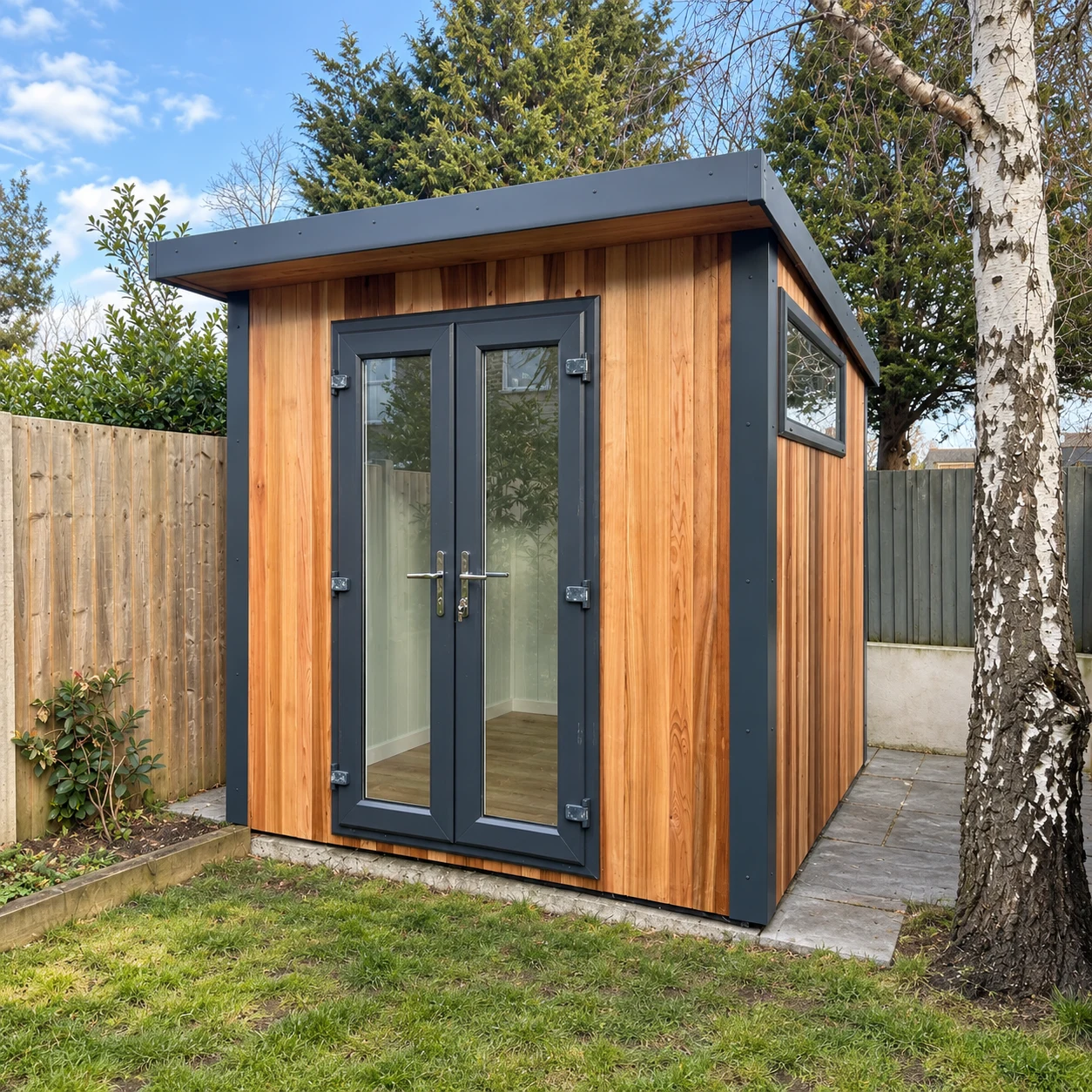
Cedar-clad garden pod with grey glazed doors beside a birch tree
In this article
  1. Maintaining your garden room
  2. Insulating your garden room
  3. Getting Cosy
  4. Doors, windows and locks
  5. The base and the ground around it
  6. Cladding care by material

The short version

  • General maintenance includes removing leaves from the roof and guttering before the winter.
  • If your garden room has a water supply, shut it off before the first frost and open all the taps until they run dry.
  • Thick, draught-resistant curtains and draught excluders in front of the doors go a long way to blocking out the cold.
  • Doors and windows should move freely and lock without force. If a door tightens in a wet spell, contact us rather than forcing it.
  • Care depends on the cladding: composite needs a wash-down, Thermowood needs no paint and cedar silvers unless oiled.

With autumn well and truly here you might be wondering “will my garden room get cold in the winter?” If you’re worried about braving the elements this year, here are some of the best ways to winter-proof your outdoor room so you can enjoy it regardless of the weather.

Maintaining your garden room

This is a great time to take care of routine maintenance tasks too. General maintenance includes removing leaves from the roof and guttering, and repainting the outdoor walls with a waterproof paint if they are painted timber.

If you’ve connected your garden room to a water supply, consider turning off the taps before the first frost sets in. Frozen pipes can easily burst leading to leaks and water damage. When shutting off the water supply make sure the pipes are completely empty of water by opening all the taps until they run dry.

Adding a dehumidifier to your garden room will also keep it free of any damp and mould that can accumulate during the rainy seasons.

Insulating your garden room

Keep your garden room cosy all year round by insulating it. You can insulate the roof, walls, windows, doors and even the floor for maximum heat retention.

The best types of insulation for your wooden garden room are wood wool, mineral wool, or hemp fibre insulation. However, you can also use polystyrene boards to insulate your outdoor room but this is a less ecologically-friendly option and may not be as effective as wool or fibre insulation.

Adding thick, draught-resistant curtains to the windows and draught excluders in front of the doors will go a long way to blocking out the cold too.

Getting Cosy

Leave a portable heater or oil filled radiator in your garden room to give you an extra boost of heat during the winter. You can use timers on fixed heating to ensure the room is at an optimal temperature before you need to use it (perfect if your garden room is a home office) or to keep it toasty all day long.

Having lots of blankets, throws and fluffy rugs or carpet will also stop you from feeling the chill while spending time in your garden room.

Winter is the perfect season for spending time in your garden room, creating your own comfy retreat and hiding away from the elements. How will you use your garden room this winter?

Doors, windows and locks

  • Open and close every door and window: each should move freely and lock without force.
  • Look along the seals for gaps, splits or sections that have come away.
  • Clear grit and leaves from thresholds and from the tracks of sliding and bi-fold doors.
  • Check that every lock engages fully, and keep the keys in the house.
  • Follow the door maker's care guidance for the locks and hinges.

Timber moves with the seasons, so a door can tighten in a wet spell. Don't force it or try to adjust it yourself: contact us and we will advise on the next step.

The base and the ground around it

Keep the ground round the building clear, so water drains away and air can move under and around it. Our autumn garden checklist covers the lawn, beds and trees around it.

  • Rake leaves and debris away from the base, including whatever has blown under a building on ground screws.
  • Keep soil, bark and gravel below the bottom of the cladding, and don't heap anything against the walls.
  • Move pots, log piles and stored items a little way off the walls.
  • After heavy rain, check that water drains away rather than pooling against the base.
  • Look for changes around the base, such as sinking ground or a new gap, and tell us if you see one.

Cladding care by material

Care depends on what your building is clad in. Ask us for the guidance for your cladding before you put anything on it, because a product that suits one finish can mark another.

CladdingBefore winterHow it ages
Pressure-treated timberCheck the paint for splits, flaking and worn patches, and touch it up in a dry spell. Our terms recommend keeping the waterproofing paint up yearly, or as the paint maker recommends.Its waterproofing paint protects it while you keep it up
ThermowoodCheck for splits and brush off dirt. It needs no paint unless you want to change its colour.Weathers evenly
CompositeWash down with a soft brush and water to lift dirt and green growth.Holds its colour; a wash-down is the main care
Western Red CedarBrush off dirt. Oil it in a dry spell only if you want to keep its colour.Naturally durable; silvers unless oiled
Slatted profileBrush out leaves and cobwebs from between the slats.Care follows the material
Apply any treatment in a dry, mild spell: the product label gives the temperature and drying time it needs.

Written by Jay Wise, Director at Noah Garden Rooms, with the team at our Shropshire workshop. First published 17 October 2022. Updated 4 October 2026. Prices include VAT and are correct at October 2026.

Common questions

Questions we are often asked

Are garden rooms warm in winter?

Insulated ones are, with a heater. Pods, Garden Rooms, Signature and Annexes are insulated in the walls, roof and floor; Garden Buildings are not, and are best used from April to October. Our winter garden room guide covers heating and condensation.

Compare the complete wall, roof and floor specification, together with glazing and the way junctions are formed. A single insulation thickness or panel description does not explain the performance of the finished room. Ask which construction is available on the selected range and how the proposed package suits the intended season and pattern of use. Keep the need for heating, ventilation and appropriate operation in the conversation; an insulated shell alone cannot guarantee a particular indoor temperature in every circumstance.

Insulation helps limit heat transfer, but it does not generate heat. The heating arrangement should suit the room's size, layout, use pattern and electrical capacity. A room occupied throughout the working day has different operating requirements from one used occasionally for an evening hobby. Discuss controls and separate rooms if the building is partitioned. Ask what is included in the selected package and what needs pricing separately, rather than assuming a heater or a particular heating performance follows from the range name.

Do I need to treat my garden room before winter?

Painted timber needs its waterproofing paint kept up yearly, or as the paint maker recommends, so autumn is a good time to check it and touch it up in a dry, mild spell. Thermowood needs no paint unless you want to change its colour, cedar needs oiling only if you want to keep its colour, and composite needs a wash-down. Ask us for the guidance for your cladding first.

The care routine depends on the timber and any existing treatment or coating. Before painting, staining or refreshing a finish, check the supplier's instructions for preparation, suitable products and the condition the wood needs to be in. Keep a record of the finish used so future maintenance is compatible. Inspect the exterior periodically for damage and blocked details, particularly after poor weather. Avoid assuming that treatment removes every maintenance task or that a fixed repainting interval suits every elevation and exposure.

Should I leave the heating on over winter?

If you use the room regularly, a steady, low setting on a fixed heater's thermostat helps keep condensation down, alongside daily airing. If the room will stand empty, open it up once a week instead. Rooms with water need frost protection. Never leave a portable heater running unattended.

Insulation helps limit heat transfer, but it does not generate heat. The heating arrangement should suit the room's size, layout, use pattern and electrical capacity. A room occupied throughout the working day has different operating requirements from one used occasionally for an evening hobby. Discuss controls and separate rooms if the building is partitioned. Ask what is included in the selected package and what needs pricing separately, rather than assuming a heater or a particular heating performance follows from the range name.

Comfort depends on managing fresh air, moisture and solar gain as well as keeping heat in. Consider the number of occupants, equipment producing heat, glazing orientation and whether windows can open safely. Heating or air conditioning should not be treated as a substitute for suitable ventilation. If the intended use creates extra moisture or heat, raise that in the initial brief. Equipment choice and day-to-day operation need to suit the room rather than relying on one generic temperature or running-cost promise.

Can I clear snow off the roof?

Not by climbing up, and don't lean a ladder against the building. If a heavy fall worries you, call us on 0333 051 0852 for advice.

Make sure the agreed position leaves the access needed for installation, inspection and maintenance. Nearby fences, trees and other buildings can affect that access and the accumulation of debris. Follow the supplied care instructions for the roof covering and drainage components, and ask before attaching items or changing the covering. If a problem appears, send photographs taken safely from the ground where possible. Do not climb onto the roof or undertake a repair without establishing that the method is safe and suitable for the structure.

Plan a care routine around the components actually selected for the building. Exterior boards, glazing, door hardware, roof drainage and interior finishes do not necessarily share the same cleaning or maintenance requirements. Keep the supplied instructions and use compatible products. Inspect accessible areas periodically and report damage or persistent changes rather than assuming they are normal wear. Avoid obstructing ventilation or drainage, and seek advice before making structural alterations, adding heavy fixtures or applying a treatment that was intended for a different material.

My garden room door sticks in winter. Is that a fault?

Timber responds to moisture and temperature, so some seasonal movement is normal and does not by itself mean a structural fault. Don't force or adjust the door; contact us and we will advise.

For an aftercare enquiry, provide the order or design reference, installation address and a clear description of what you have noticed. Include photographs showing both the detail and its position on the building, together with when it started and whether conditions affect it. Mention any maintenance or alterations already carried out. Avoid guessing the cause or beginning work that could obscure the issue before advice is obtained. The team can then explain the next step and what further information or assessment may be needed.

Read the written guarantee alongside the quotation and the instructions supplied with the building. Structural cover, individual components, equipment and surface finishes may have different terms, so check which issue each document addresses. Keep order details, photographs and maintenance records available if you need to make an enquiry. Tell Noah about a suspected problem before arranging alterations or repairs that could make assessment harder. A general description of the guarantee should not replace the actual terms or imply that every item receives identical cover.

Next steps

Ready to design your garden room?

Price your own design online in a few minutes, or come and see the buildings for real at our indoor showroom in Telford.

Free 48-page brochure

Get the Free Garden Room Brochure in Your Inbox

Forty-eight pages of finished buildings, every range with sizes and from-prices, and plain explanations of cladding, insulation and electrics. Request the brochure by email. Our team may follow up to discuss your plans.

Noah Garden Rooms brochure open at the composite garden rooms pages
  • 48 pages of garden rooms and real installs
  • Every range with sizes and from-prices
  • Cladding, insulation and electrics explained
  • Emailed brochure, with follow-up from our team

Email me the brochure

Tell us where to send your free brochure and start exploring the possibilities for your garden.

We will use your details to send the brochure and respond to your request. Prefer to talk? Call 0333 051 0852.

Request a Callback

Watch Noah

Design & Get Instant Price

On-screen captions included.