In this article
The short version
- An art studio wants even north light and wall space to step back
- A pottery studio wants a tough floor, strong ventilation and the right power for the kiln
- A music studio wants sound control, which is acoustic panelling and sealed openings, not just insulation
- A yoga studio wants warmth, calm and a clear floor
- Every studio wants good insulation, so it works all year rather than only in summer
Garden studios are the most specialised room we build, because the craft sets the spec. An art studio wants north light, a pottery studio wants a tough floor and good ventilation, a music studio wants sound control, a yoga studio wants calm and warmth. Get those four things right at the design stage and the studio works from the first day.
Most people who ask us about a garden studio already know what they want to do in it. They want to paint, throw pots, record music, or roll out a mat and breathe. What they are less sure about is which of those needs actually change the building, and which are just a matter of what they put inside it. That gap is where money gets wasted, because a garden studio is the one room where the use really does change the spec.
We design, build, deliver and fit every studio ourselves from our workshop in Telford, Shropshire. We have built studios for painters, potters, photographers, musicians and yoga teachers, and the honest lesson is always the same. A studio that was planned around the craft gets used every week. One that was bought as a generic room and adapted later ends up fighting the work. This guide walks through the decisions that matter, by craft, so you can design yours around what you actually do. If you would rather see a price as you go, you can Design & Get Instant Price and build your studio online in about three minutes.
What makes a garden studio work
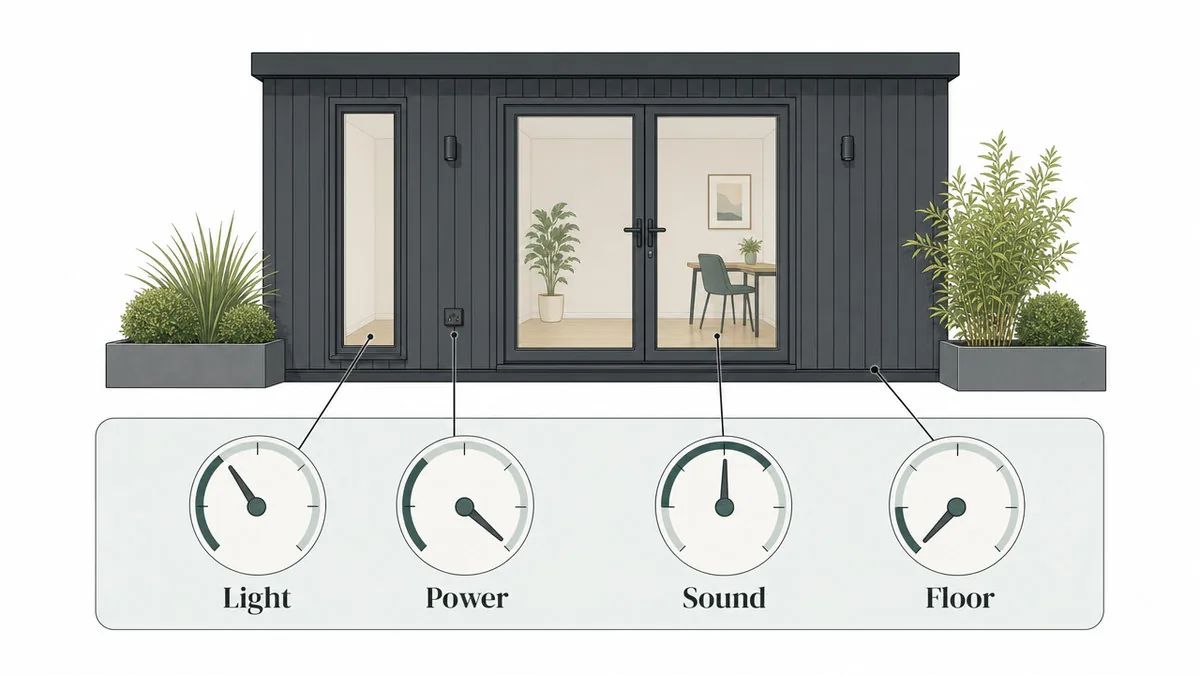
A garden studio is not a different product from a garden room. It is a garden room specified for a job. The structure, the insulation and the build are the same quality we put into every room. What changes is the handful of choices that the craft pushes to the front.
A studio is defined by what you do in it
Call it a studio and people picture something artistic, but the word only describes the use. The building underneath is one of our insulated rooms, and the reason the word matters is that it tells us which decisions to get right first. A painter and a drummer want almost opposite things from the same footprint. One wants flat, even light and will happily trade a window for a blank wall. The other wants the walls working hard to keep sound in. Naming the craft before the room is the first and most useful thing you can do.
Light, power, acoustics and flooring do most of the work
Four things separate a studio that works from one that merely exists. Light, because most creative work is looking at something closely. Power, because kilns, amps, kit and tools all draw more than a laptop. Acoustics, because sound is either the point or the problem. Flooring, because clay, paint, sweat and dropped tools are hard on a floor. Everything else, the cladding, the roof line, the doors, is the same set of choices you would make on any room. These four are the ones the craft decides.
Where a studio sits in our range
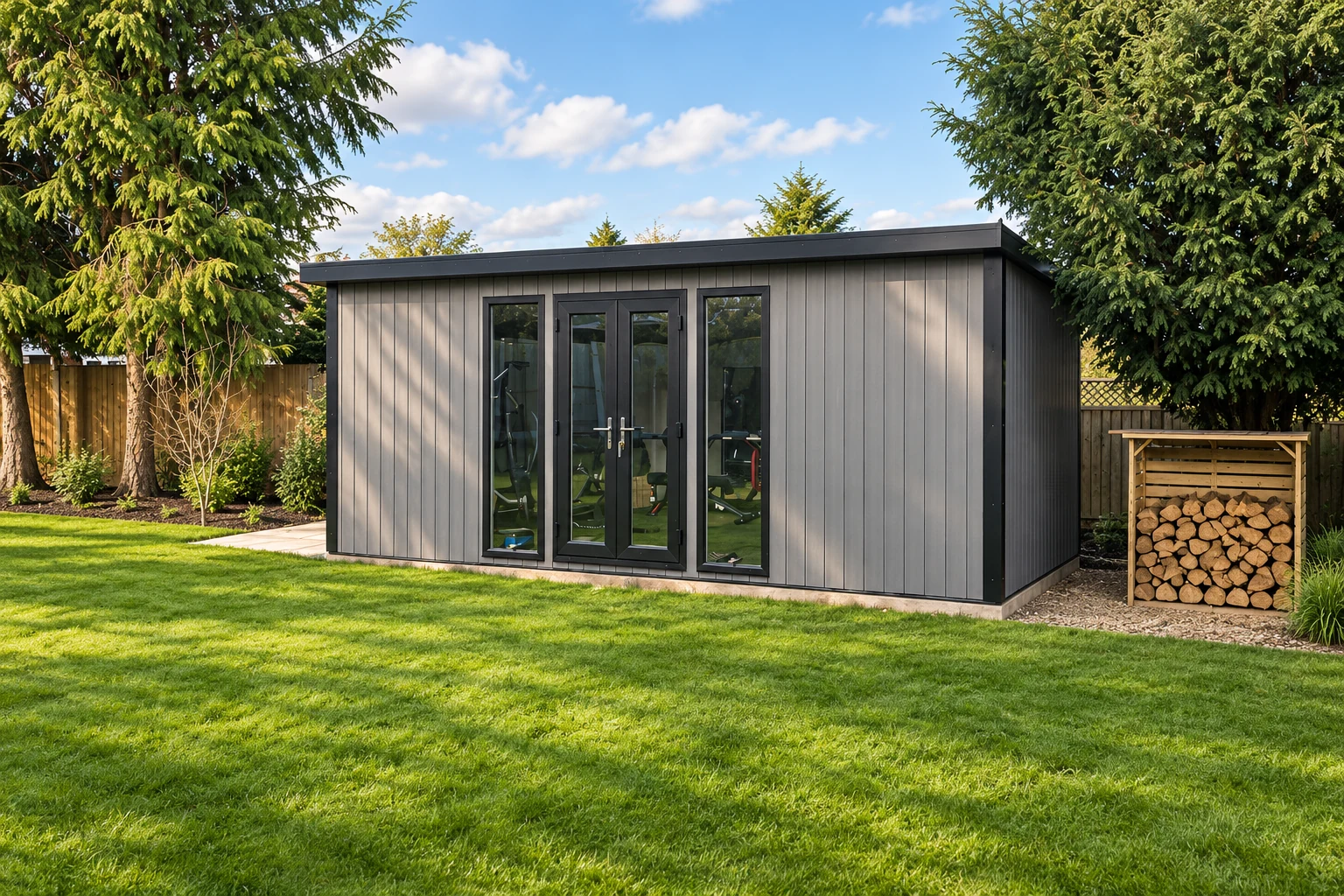
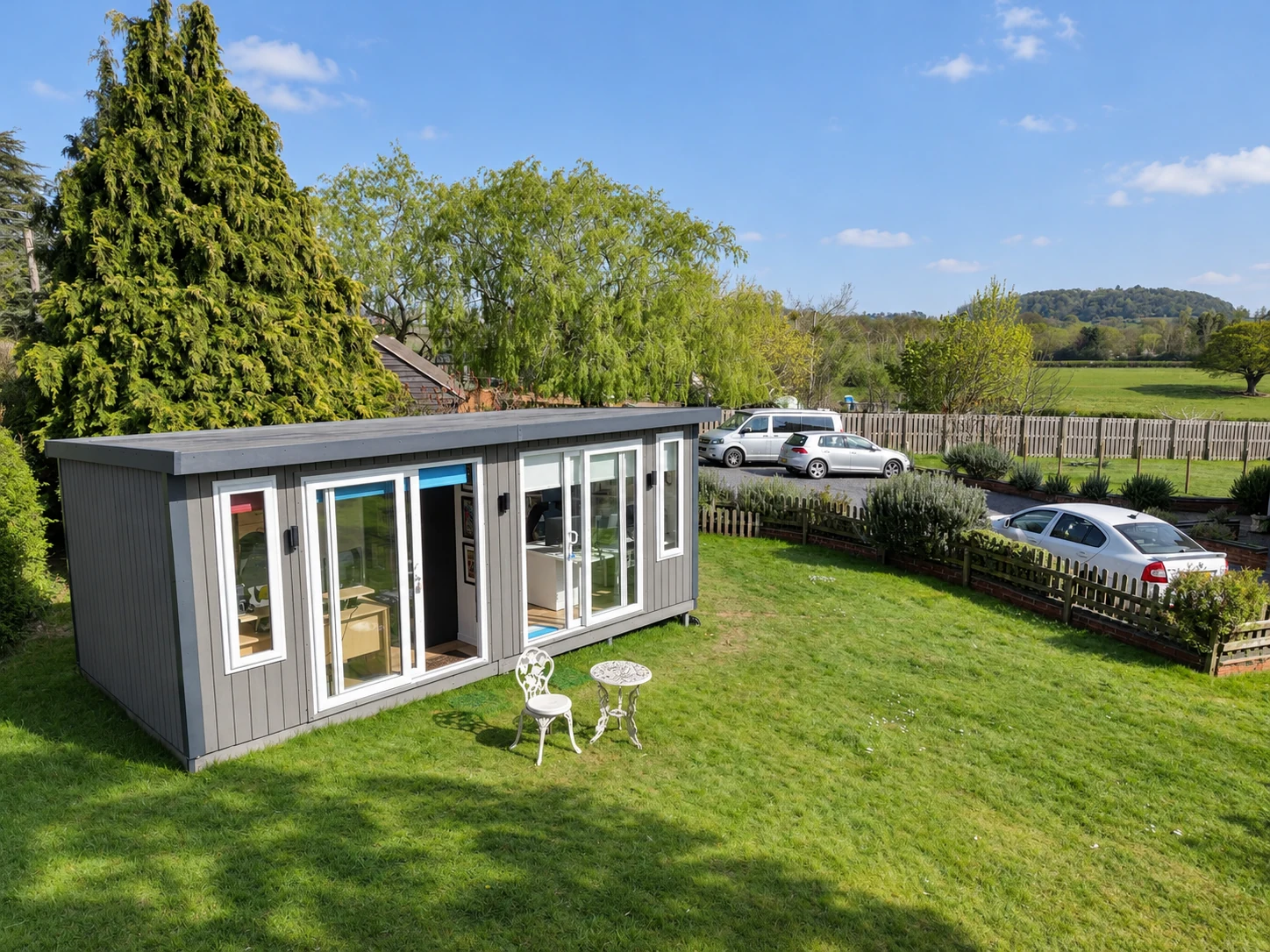
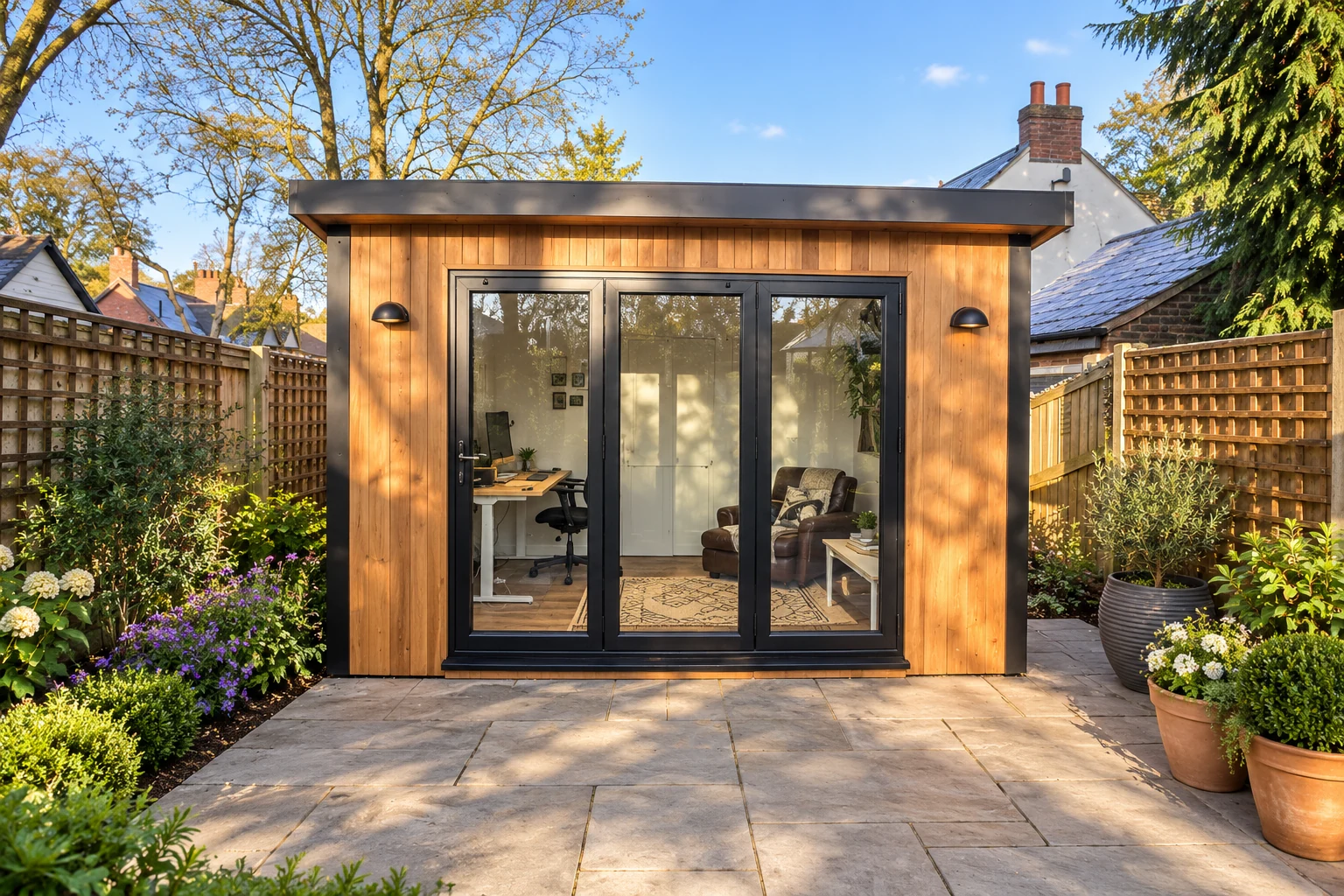
Most studios are built on our garden rooms range, which is fully insulated, wired with electrics as standard, and fully customisable, so it takes the studio upgrades without a fuss. Where the work asks for the highest insulation and the quietest shell, our Signature range steps up to premium SIPS build and foundation included. One range we usually steer studio buyers away from is our garden pods, where electrics are an optional add rather than standard, because almost every studio needs reliable power from day one. Starting on the right range saves you buying your way up to it later.
Matching the studio to your craft
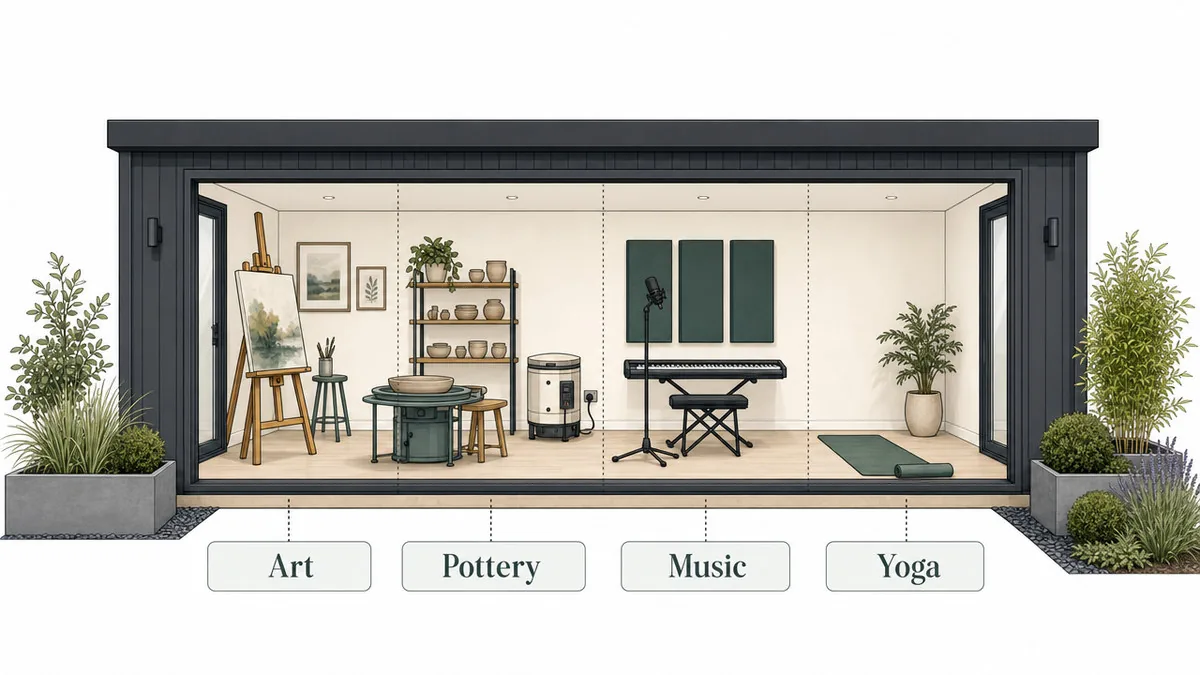
The same footprint serves a painter, a potter, a musician and a yoga teacher very differently. Here is how each craft changes the brief, so you can see which parts of yours are standard and which are worth upgrading.
An art or painting studio
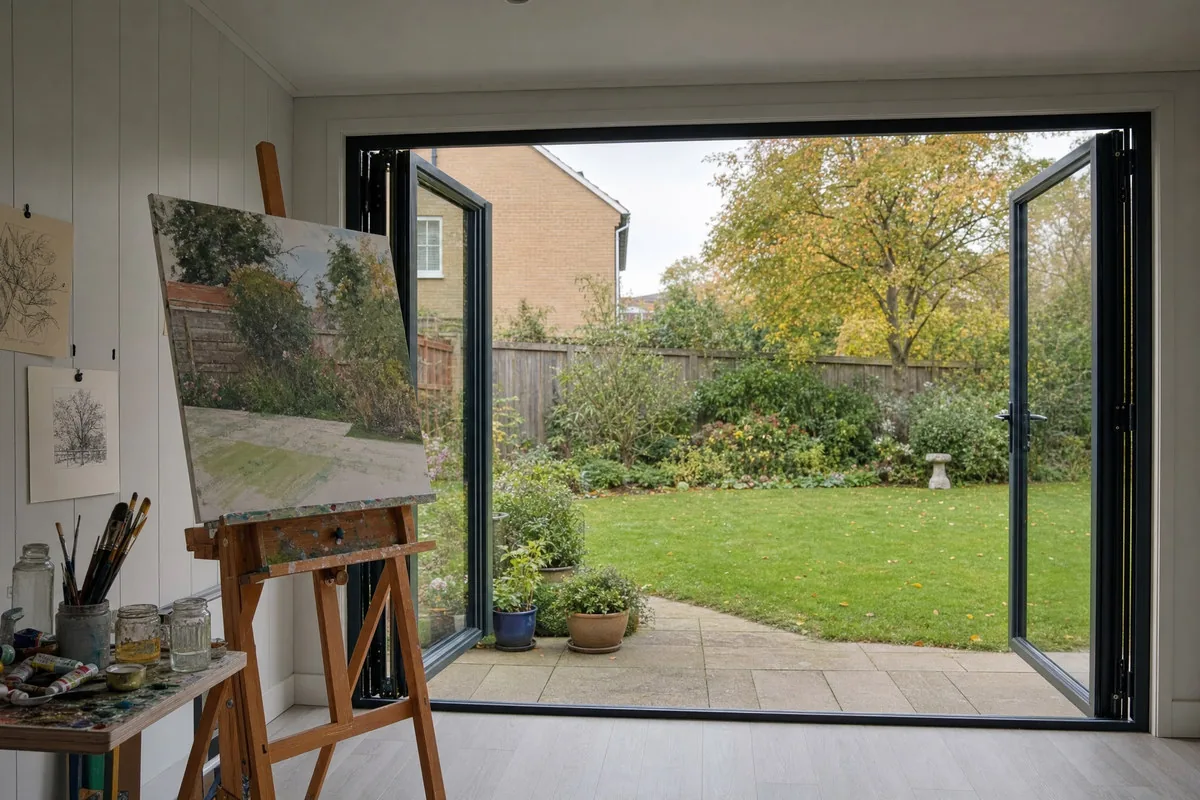
Painting is about seeing colour truthfully, so light is everything and heat is the enemy of a long session. You want steady, even light rather than bright direct sun that moves across the room and throws shadows over the work. Wall space matters as much as glazing, because you need somewhere to hang, lean and step back from a piece. A hard-wearing laminate floor, which comes as standard in our rooms, shrugs off dropped brushes and spilt water far better than carpet. Storage for solvents and materials wants to be dry and ventilated, which a well-built insulated room gives you anyway.
A pottery or ceramics studio
Pottery is the most demanding studio to build, and the most rewarding to get right. Clay is wet, dusty and heavy, so three things come to the front. Flooring needs to be tough and wipeable, because clay gets everywhere and fine dust is the enemy of a clean finish. Ventilation matters more here than in any other studio, both for clay dust and for the heat a kiln throws out. Power is the big one, because many kilns draw a serious load, and some larger kilns need a supply beyond a standard socket. We fit electrics as standard and can advise on where to put the plug sockets for your kiln and equipment. Check your kiln's power needs with the manufacturer or an electrician before you commit, because some larger kilns need more than a standard socket.
A music or recording studio
A music studio is a sound problem in both directions. You want to keep the music in, so it does not carry to the neighbours, and keep the world out, so a passing car does not land on the recording. Insulation helps, because a dense, well-sealed shell is already a decent sound barrier, but insulation is built for heat, not sound, and the two are not the same job. This is where acoustic panelling earns its place as an interior upgrade, softening reflections so the room does not boom. Doors and windows are the weak points for sound, so fewer, better-sealed openings beat a wall of glass here.
A yoga or movement studio
A yoga or movement studio asks for the simplest spec and the calmest feel. You want warmth underfoot, even light, and quiet. Good insulation does most of this on its own, holding a gentle, even temperature so the room is ready when you are rather than freezing at seven in the morning. Space to move without hitting anything matters more than fittings, so a clear floor and a long, uninterrupted wall for balance work are worth planning in. Our garden yoga studio page shows how these rooms come together.
| Studio type | Light | Power | Sound | Floor and extras |
|---|---|---|---|---|
| Art or painting | Even north light, big glazing | Standard sockets and lighting | Not a priority | Hard-wearing floor, wall space to hang |
| Pottery or ceramics | Good general light | Heavier load, kiln needs checking | Not a priority | Toughest floor, strong ventilation |
| Music or recording | Fewer, sealed windows | Standard, plus kit sockets | Acoustic panelling, sealed openings | Solid floor, soft furnishings |
| Yoga or movement | Even, calming light | Standard sockets and lighting | Quiet rather than treated | Clear floor, warm and even heat |
Getting the light right
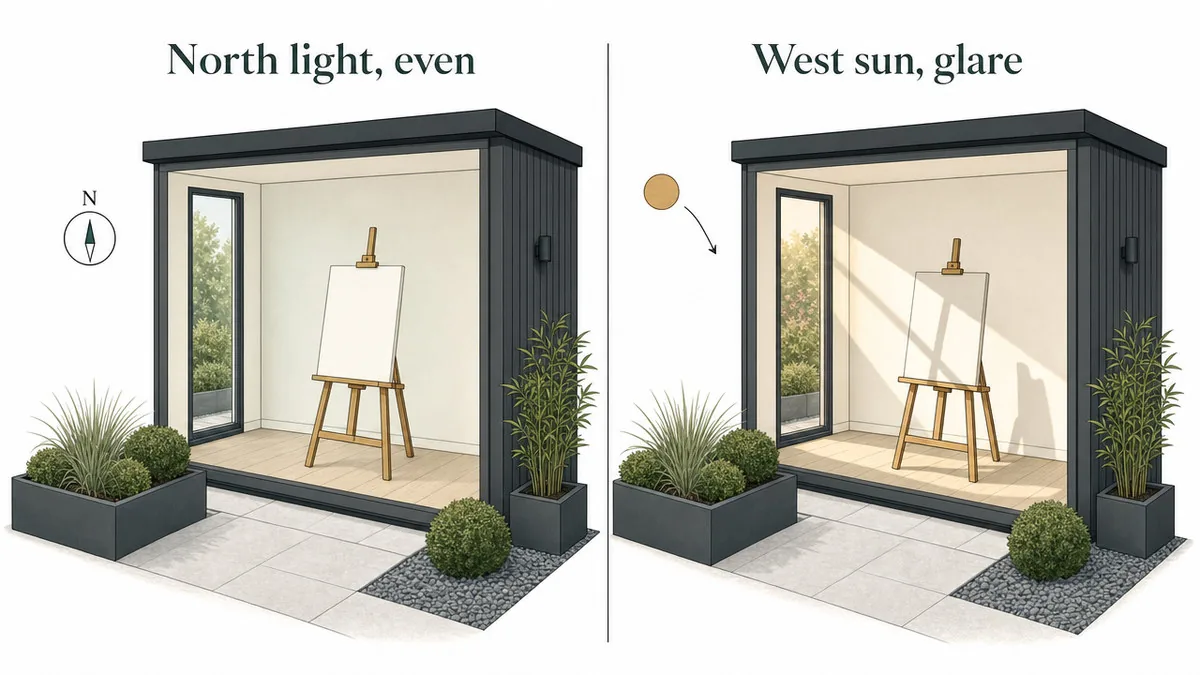
Light is the decision that painters, photographers and makers care about most, and it is the one people most often get back to front by chasing the brightest room rather than the steadiest one.
North light for art and photography
North-facing glazing gives flat, even light that barely changes through the day and casts almost no hard shadow. Painters have chased it for centuries, and photographers want it for the same reason. If your work depends on seeing true colour or an even wash of light, point the main glazing north and you remove the glare and the moving shadows in one decision. South-facing glass gives more light and more warmth, which suits a yoga room far better than a painter at an easel.
Glazing, glare and screens
For a photographer editing on a screen, or anyone working on a monitor, direct sun is the enemy. A wall of west-facing glass behind a screen makes it unreadable by mid-afternoon. The fix is to decide where you will sit and work before you decide where the glass goes, not the other way round. Our garden photography studio rooms are planned around this, with the glazing placed for the light you want and shade where you need to kill it.
Managing sound in and out
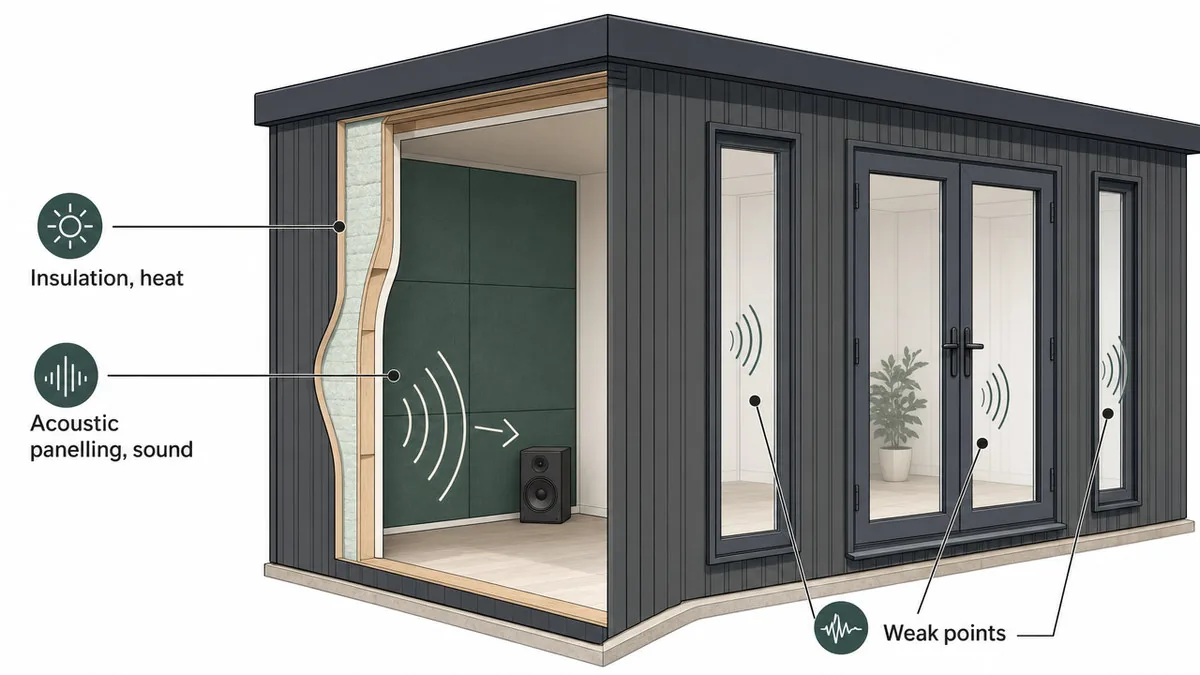
Sound is the point in a music studio and the problem in every other one, and it is the spec people most often misunderstand, because they assume insulation and soundproofing are the same thing.
What insulation does and does not do for sound
A well-insulated, well-sealed room already blocks a fair amount of sound, simply because a dense shell with no gaps is harder for noise to pass through. That is a useful side effect, not the main job. Insulation is designed to hold heat, and a room can be beautifully warm and still let a drum kit carry across three gardens. If sound control is the reason you are building, say so early, because it changes the glazing, the doors and the interior rather than the heating.
Acoustic panelling as an upgrade
Inside the room, hard flat surfaces bounce sound around and make it boom, which is miserable for recording and tiring for teaching. We offer acoustic panelling as an interior wall finish on our garden rooms and above, and it is far cheaper to specify now than to retrofit once the room is in use. It softens the reflections so voices and instruments sound clean rather than hollow. It is the single most useful upgrade for a music studio, and a quiet help in a busy pottery or a class space too.
Floors, doors and the weak points
Sound leaks through the weakest point, and in most rooms that is the glazing and the doors rather than the walls. If keeping sound in matters, fewer and better-sealed openings beat a glass frontage, and a solid door does more than a glazed one. A heavy floor build helps stop sound dropping down and out. None of this turns a garden studio into a professional recording booth, and we will be straight with you about that, but it gets a home music room to a point where you can play without watching the clock or the neighbours.
Power, heating and all-year use
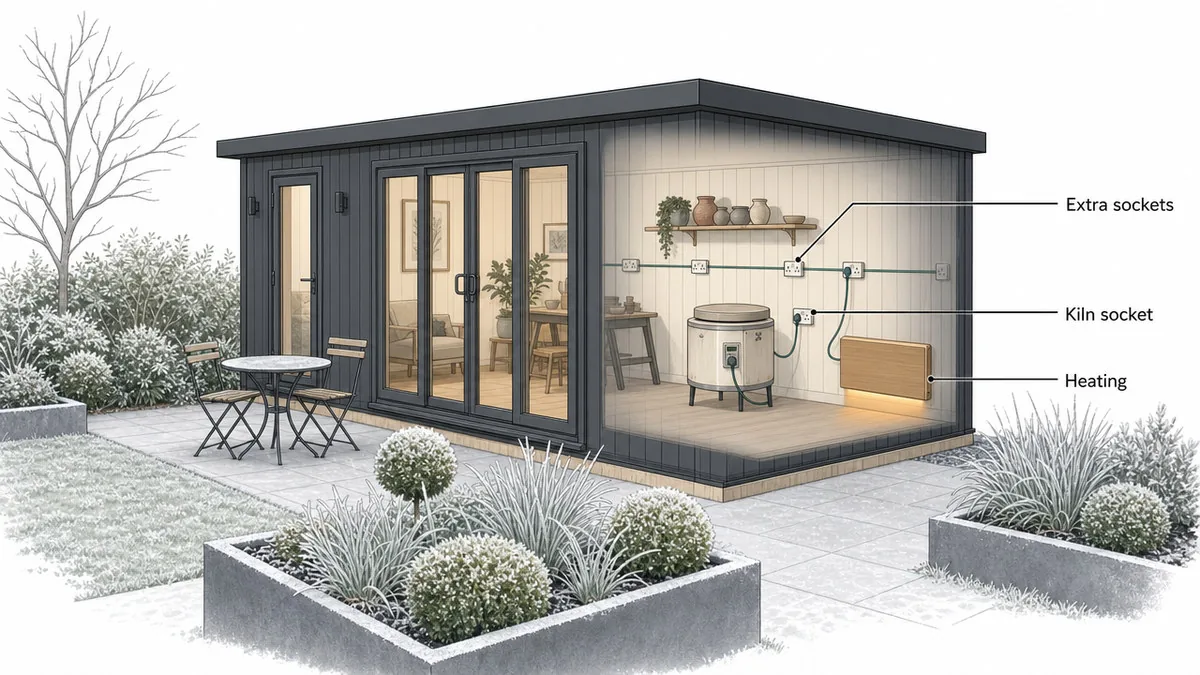
A studio you can only use in summer is a summerhouse with ambitions. The parts that make a studio work all year are the ones you cannot see once it is finished.
Electrics and the pods question
Every one of our garden rooms comes wired with sockets and lighting as standard, by qualified electricians, as part of the build. A studio usually wants more sockets than a plain room, for kit, tools, chargers and lighting, and that is easy to plan in. The one thing to flag is that on our budget garden pods range, electrics are an optional add rather than standard, so if your heart is set on a pod, build the power in rather than assume it. For most studios the garden rooms range is the more natural home precisely because the power is already there.
Heating a studio you use in winter
The better the insulation, the cheaper the room is to heat, which is the honest maths behind running a studio through a British winter. A well-insulated room holds its warmth, so many of our customers heat a studio this size with a single efficient electric heater. Heating is an optional upgrade you can design in, and it is worth matching to how you will use the room. A yoga teacher starting at seven in the morning wants warmth ready and waiting in a way a weekend painter may not.
Ventilation for dust, damp and kiln heat
Ventilation rarely makes the wish list and often makes the difference. A pottery studio needs it for clay dust and kiln heat. A painting studio wants it for solvents. Any studio used hard by one person for hours wants fresh air to stay comfortable. Good ventilation also keeps damp down, which protects both your work and the building. Opening windows and doors do most of the work, so think about where you want them, and about any extraction your equipment needs, before you finalise the design.
Planning permission and what a garden studio costs
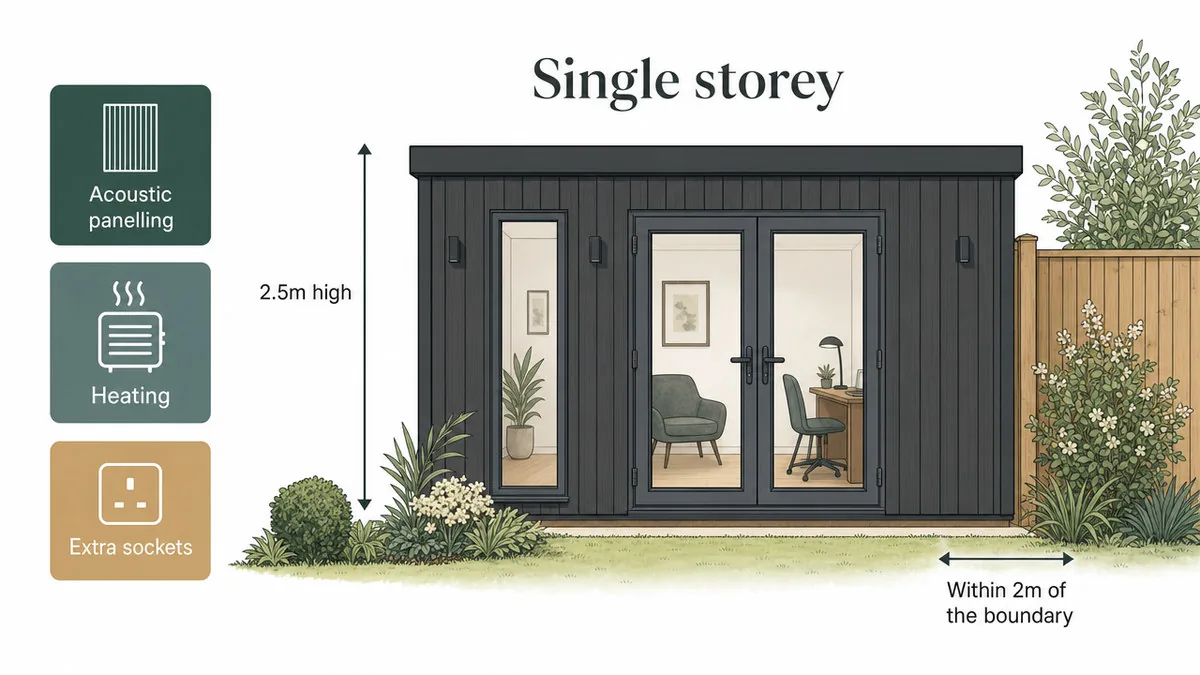
Two questions come up on every studio enquiry. Do I need permission, and what will it cost. Here is the honest position on both.
The permitted development limits
Most garden studios in England fall under permitted development, which means no planning application, provided the building stays within the limits. In broad terms an outbuilding must be single storey, sit no higher than 2.5 metres if it is within two metres of a boundary, and cover no more than half the land around the original house. The full detail sits with the Planning Portal and gov.uk planning guidance. We advise on the design, we do not rule on your plot, so always confirm your own position before you commit, and our planning guidance sets out how we work.
When the rules change
Two things commonly change the picture. A studio used purely for work, art or exercise is straightforward, but if you want to sleep in it, permitted development does not allow use as self-contained living accommodation, and that follows a different route. Designated land, conservation areas, national parks and listed buildings all tighten the rules too. We design your studio to sit within the rules from the start, which is far cheaper than redesigning after the base is down.
Where our studios start and what moves the number
A garden studio is built on our garden rooms range, which starts from £9,368, with larger and higher-specification rooms rising from there. Every price already includes delivery, installation by our own team within 150 miles of Telford, and a 10-year structural guarantee. What moves the number for a studio is the handful of craft upgrades: acoustic panelling, extra sockets, heating, or the step up to a Signature build. The cleanest way to see what each choice adds is to build yours in the configurator, where every option shows its own price as you select it, and our guide to garden room costs walks through a full budget. We also offer our Best Price Guarantee on a like-for-like build, and flexible finance over 10, 12 and 24 months to spread the cost.
Designing a studio around your craft
A garden studio is the one room where the use really does set the spec, so the best thing you can do is start with the craft and work back to the building. Name what you will make in it, get the light, power, sound and flooring right for that, and the rest is the same quality room we build for every customer.
Every studio is designed, built, delivered and installed by our own team in Telford, Shropshire, with free delivery and installation within 150 miles, a 10-year structural guarantee, our Best Price Guarantee on a like-for-like build, and flexible finance over 10, 12 and 24 months. We are rated Excellent on Trustpilot from more than 750 reviews.
Design & Get Instant Price to build your studio online and see the price as you choose each option. Or Book a Showroom Visit and stand inside one first. We are open Monday to Friday 9 to 5 and Saturday 9 to 3.